
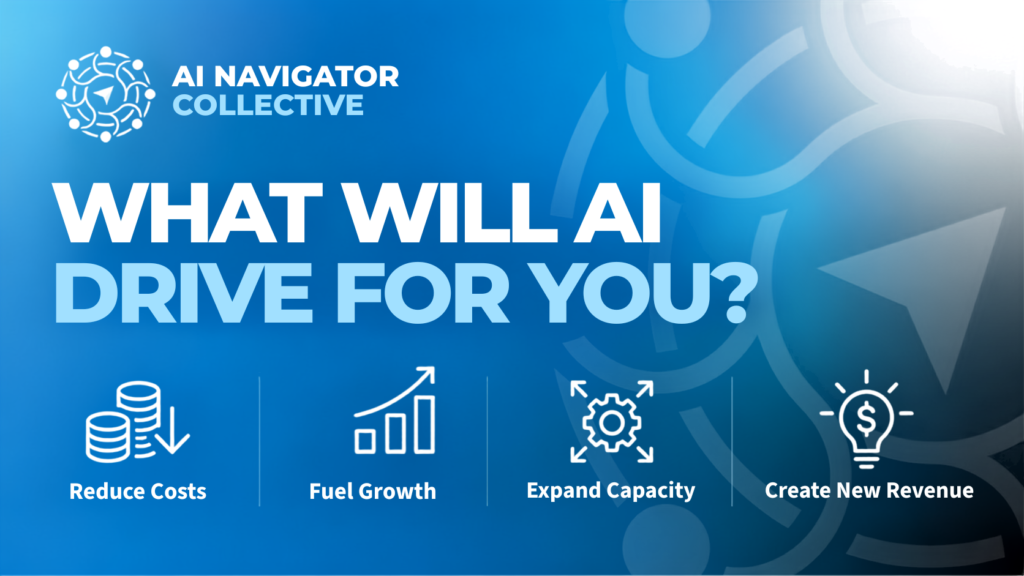
The real return on AI begins after the time is saved. It comes from what a business does with that newly created capacity: reducing costs, supporting growth without continually adding headcount, redirecting people to higher-value work, or creating new sources of revenue. The following four companies, drawn from a recent Forbes roundup by futurist Bernard Marr on businesses generating real AI ROI, show all four paths in action, starting from what looks like the same move on paper.
Walmart: capacity that avoided a hiring spree
Walmart used generative AI to clean up and enrich more than 850 million data points across its product catalog, fixing missing specs, dimensions, and descriptions that affect search results, inventory accuracy, and order fulfillment. According to CEO Doug McMillon, doing that same work manually would have required roughly 100 times the current headcount to finish in the same timeframe.
Walmart didn’t shrink its team. It avoided having to massively expand one, at a scale that would have been operationally and financially unworkable otherwise. The value here shows up as headcount the company never had to add, not as a line item on a savings report.
DoorDash: capacity converted directly into cost savings
DoorDash built a voice-activated support system for delivery drivers using Amazon Connect and Amazon Lex, so drivers could get help hands-free instead of pulling over and waiting on hold. The system cut the number of calls that needed a live agent by 49 percent, translating into roughly $3 million a year in direct operational savings.
Cost reduction is the most straightforward path, and the one most companies default to, since it’s the easiest to measure. It’s a legitimate outcome. Treating it as the only one is where most AI business cases undersell themselves.
Bank of America: capacity redirected toward what needs a human
Bank of America’s EricaAssist tool, used by more than 18,000 customer service representatives, delivers real-time guidance during client calls and cuts average call time by close to a minute per interaction. The bank has been explicit that the goal isn’t fewer employees on the phone, it’s employees spending less time on routine lookups and more time on the parts of a client conversation that require judgment.
Nothing here shows up as a savings line. It shows up as service quality, retention, and the kind of client trust that’s hard to put a dollar figure on and easy to lose.
IKEA: capacity turned into an entirely new business line
IKEA’s chatbot, Billie, took over roughly 47 percent of routine customer inquiries. Instead of reducing call center staff, the company retrained 8,500 of those employees as remote interior design consultants and digital sales advisors. That new remote sales channel reportedly generated around $1.4 billion in a single fiscal year, a result nobody would have predicted from a chatbot deployment.
This one, capacity turned into a new revenue stream, is the path leadership teams plan for the least. It required someone to notice that customers calling in weren’t just asking about order status. They were asking for help they’d happily pay for. We go deep on how IKEA made this decision in the next article in this series.
How This Applies to You
Before you call your next AI win a win, ask one question: where is the freed-up time going? If nobody can answer that yet, the pilot isn’t finished. The same four options apply at any size: cut a cost, absorb growth without hiring, redirect people to higher-value work, or fund something new. Pick one on purpose, or the hours quietly disappear back into business as usual.
Want to Learn More?
- Why 95% of Companies Using AI Still Struggle to Show ROI
- AI Doesn’t Transform Companies. Workflow Redesign Does.
- Most Companies Don’t Have an AI Strategy. They Have AI Usage.
- Stop Asking “What AI Tools Should We Use?”
FAQ
Is AI helping companies turn a profit?
The answer depends on whether AI is changing a business outcome, not just speeding up work. Look for lower costs, more capacity without added headcount, stronger customer outcomes, or new revenue. This AINC article goes deeper into why usage and activity alone do not automatically equal ROI.
What does ROI mean for an AI investment?
For AI, ROI is the business value created compared with what the initiative costs to build, buy, run, and manage. Time savings can count as ROI when they lower labor costs or allow the same output with less paid time. When costs stay the same, the value depends on what business outcome the added capacity enables. IBM’s enterprise AI cost management guidance explains why AI costs need to be tied to defined business outcomes.
Is a 40% ROI good for an AI investment?
A percentage by itself is not enough to judge the result. The time period, implementation cost, risk, and the alternative use of that budget all matter. A 40% return can be strong in one situation and weak in another. This Forbes guide to measuring AI ROI focuses on business outcomes, cost avoidance, accuracy, scalability, and revenue impact rather than one benchmark.
Does saving employee time with AI count as ROI?
It can. If AI lets the business achieve the same outcome with fewer paid hours, that is a direct cost return. If labor cost stays the same, the value comes from what the added capacity enables next. This article explains why the surrounding workflow matters when turning AI gains into business results.
What are real examples of companies getting ROI from AI?
Walmart used AI to avoid a major headcount expansion, DoorDash reduced support costs, Bank of America redirected employee time toward higher-value client interactions, and IKEA turned freed-up capacity into a new sales channel. Forbes’ roundup of companies generating measurable AI value provides additional examples and context.
Want a hand building yours? Join the AI Navigator Collective for templates, peer guidance, and plain-English updates whenever the rules move.